Collision and Uplift
The Himalaya began rising when the Indian plate met Eurasia roughly 50 million years ago. Neither landmass sank easily, so the crust between them crumpled, stacked and thickened. Rocks that once lay on the floor of an ancient ocean, the Tethys, were pushed upward — which is why the summit of Everest is made of marine limestone containing fossils of sea creatures.
The collision has not stopped. India still moves north by a few centimetres a year, and parts of the range continue to rise by millimetres annually, while landslides, rivers and glaciers wear them down. Height is the balance between the two.
Definition: thrust fault
A low-angle fracture along which older rock is pushed up and over younger rock, typical of colliding plates.
Shapes Carved by Ice
The Matterhorn's pyramid owes less to uplift than to sculpture. Glaciers on several sides of the mountain each scooped out a bowl, or cirque, cutting back into the peak until only steep faces and sharp ridges remained. A peak shaped this way is called a glacial horn. Intriguingly, the rock at the top is thought to be a piece of the African plate's margin carried over European rocks during the Alpine collision.
In Patagonia, the Torres and Cuernos del Paine show a different combination: a body of granite that cooled underground around 12.5 million years ago, later exposed and sharpened by ice, still wearing dark caps of the sedimentary rock it intruded.
Definition: cirque
An armchair-shaped hollow carved by a glacier at the head of a valley.
Mountains Left Standing
Some summits were never pushed up dramatically at all; they are what remained when surrounding rock wore away. Mount Roraima, on the border of Venezuela, Brazil and Guyana, is a tepui — a sheer-sided table of very old Precambrian sandstone, roughly two billion years old, isolated by erosion over immense spans.
Uluru in central Australia is an inselberg, an "island mountain." Its coarse arkose sandstone was tilted until its beds stand nearly vertical, which is why the rock's surface shows parallel ridges. In China's Zhangjiajie, thousands of quartz-sandstone pillars stand where water, frost and plant roots widened a grid of vertical joints.
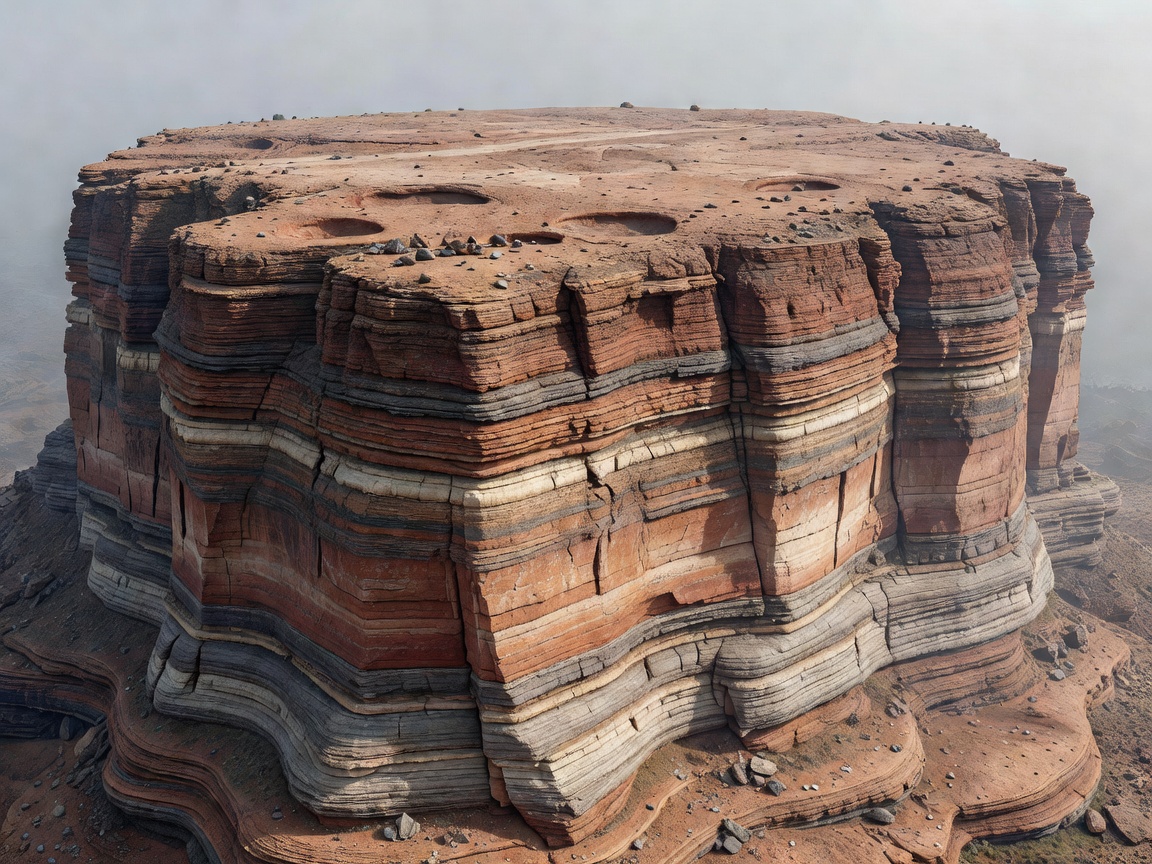 Sedimentary
Tepui
Flat summit, near-vertical walls: a resistant remnant.
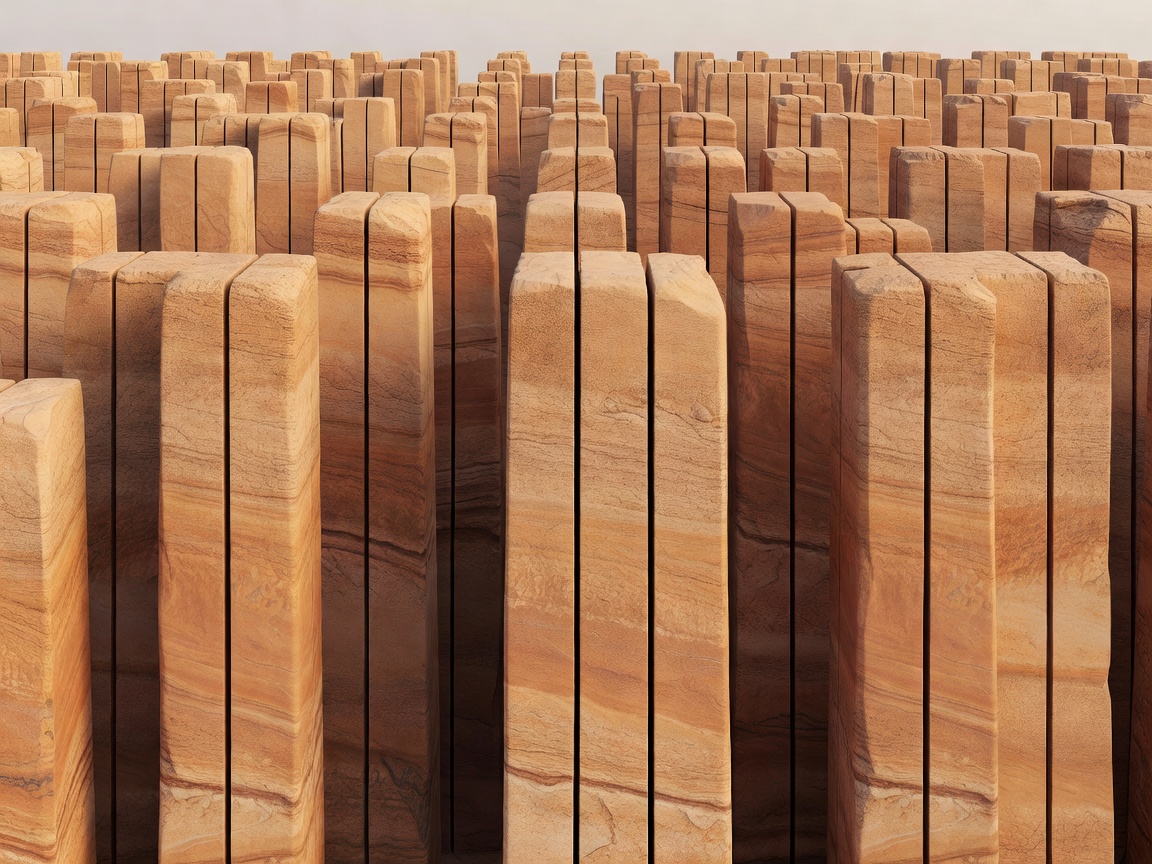 Sedimentary
Joint-guided pillars
Zhangjiajie's columns follow pre-existing crack patterns.
 Igneous
Granite tors
Corners weather fastest, so jointed blocks become rounded stacks.
Hutton's Lesson in Deep Time
In 1788, James Hutton visited Siccar Point on the Scottish coast and saw near-horizontal red sandstone resting on near-vertical grey layers. To explain it, the lower rocks had to be deposited, buried, tilted, lifted and eroded before the upper ones were laid down. The gap — an unconformity — implied far more time than was then imagined. Every mountain on this page relies on that insight.
Plate collision built the Himalaya; glacial erosion carved horns and cirques; marine fossils sit on high summits.
How strongly erosion and climate feed back on uplift rates in particular ranges is an active area of research.