From Melt to Rock
Molten rock underground is called magma; once it erupts, lava. The key property is viscosity — how stiffly it flows — which rises with silica content. Low-silica basalt runs freely and builds broad shields and long flows, as at Kīlauea in Hawaiʻi. High-silica rhyolite is stiff and traps gas, which tends to escape explosively, producing ash, pumice and steep domes.
Cooling speed then decides texture. Quickly chilled lava can become glassy obsidian; slowly cooled magma deep underground grows visible crystals, forming rocks like granite.
Definition: viscosity
Resistance to flow. Honey is more viscous than water; rhyolite lava is far more viscous than basalt.
Definition: intrusion
A body of magma that cooled underground without erupting, later sometimes exposed by erosion.
Columns from Cooling
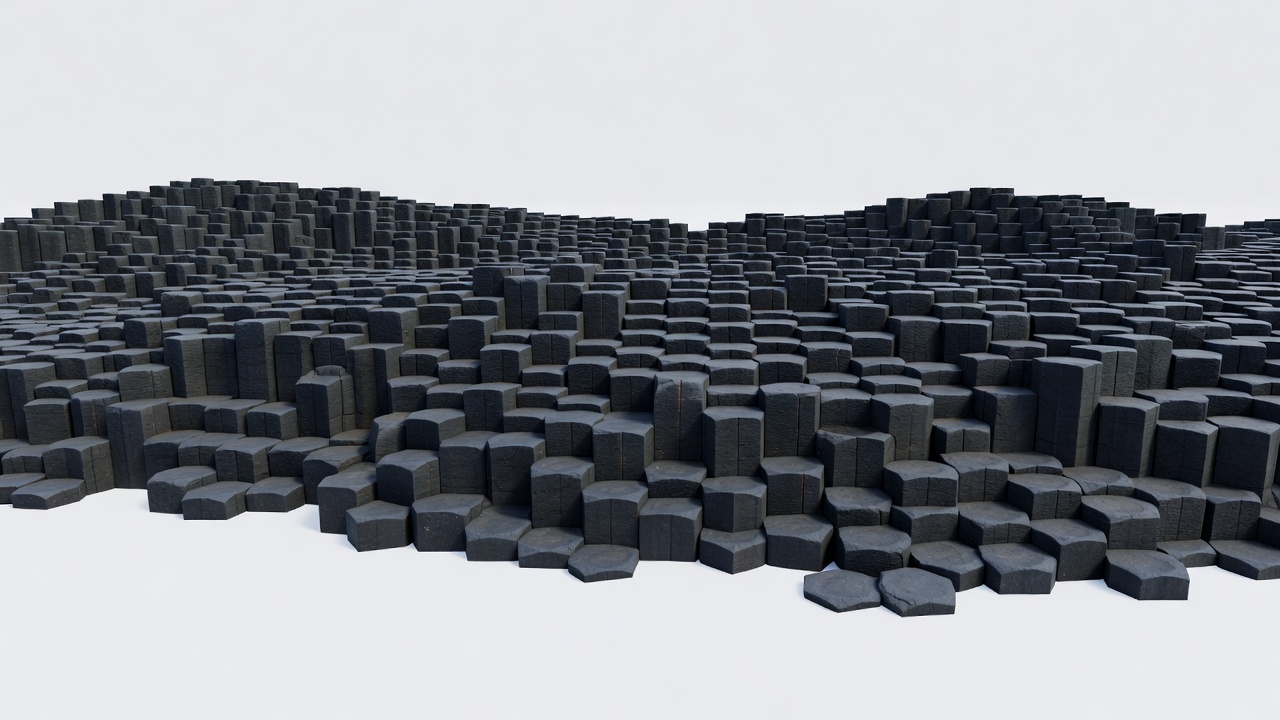
The Giant's Causeway in Northern Ireland holds about 40,000 interlocking columns, formed from thick basalt flows erupted roughly 50 to 60 million years ago. Across the sea, Fingal's Cave on Staffa is cut into the same family of lavas. Legend credits the giant Finn McCool; physics offers a well-tested explanation.
As a thick, still flow cools, it contracts. The rock cannot shrink as a single sheet, so it cracks. Cracks start at the cooling surfaces and grow inward, and the pattern that releases stress most efficiently tends toward six-sided columns, though five- and seven-sided ones are common. Laboratory and field work shows that slower cooling generally produces wider columns.
Devils Tower in Wyoming shows columns too, but its overall origin is an honest example of an unresolved question. Geologists agree it is igneous rock that cooled underground and was exposed by erosion. Whether it was a laccolith, a volcanic plug or a stock is still debated.
Columnar jointing results from thermal contraction during cooling.
Devils Tower: laccolith, volcanic plug or stock — evidence supports more than one reading.
Volcanoes Born in Living Memory
In February 1943, a fissure opened in a cornfield near the village of Parícutin, Mexico. Within a year, a cinder cone had grown hundreds of metres high; eruptions continued until 1952, burying two villages under lava. It remains one of the few volcanoes scientists have watched from birth to rest.
Off southern Iceland, Surtsey rose from the sea between 1963 and 1967. It has been protected ever since as a natural laboratory, recording how waves erode a new island and how life colonises bare rock.
Erosion can also reveal a volcano's insides. Shiprock in New Mexico is a volcanic neck: the hardened conduit of an eroded volcano, with radiating dykes running across the plain.
Comparing Volcanic Shapes
Underwater eruptions chill lava instantly into rounded "pillows", the most common volcanic rock form on Earth though rarely seen. At Dallol in Ethiopia, vivid yellow and green pools are not lava at all but hot, acidic, salt- and sulfur-rich springs — volcanic heat expressed through water.
| Form | Main process | Example | Typical timescale |
|---|---|---|---|
| Columnar basalt | Contraction while cooling | Giant's Causeway | Years to decades of cooling |
| Cinder cone | Fragments piled around a vent | Parícutin | Months to a decade |
| Volcanic neck | Erosion exposing a conduit | Shiprock | Millions of years |
| Pillow lava | Rapid chilling in water | Mid-ocean ridges | Minutes per pillow |
| Hydrothermal field | Hot fluids depositing minerals | Dallol | Continuous, changing yearly |
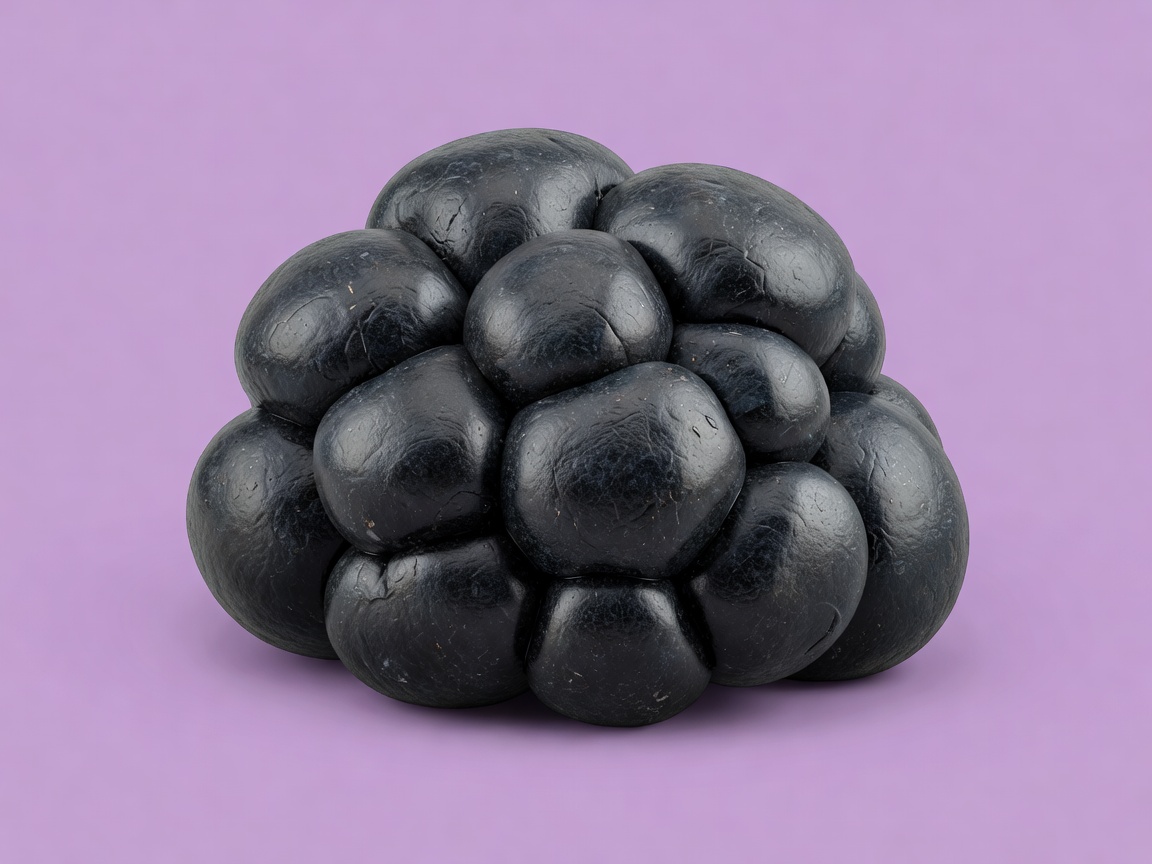 Igneous
Pillow lava
Glassy rinds over lava that kept flowing inside.
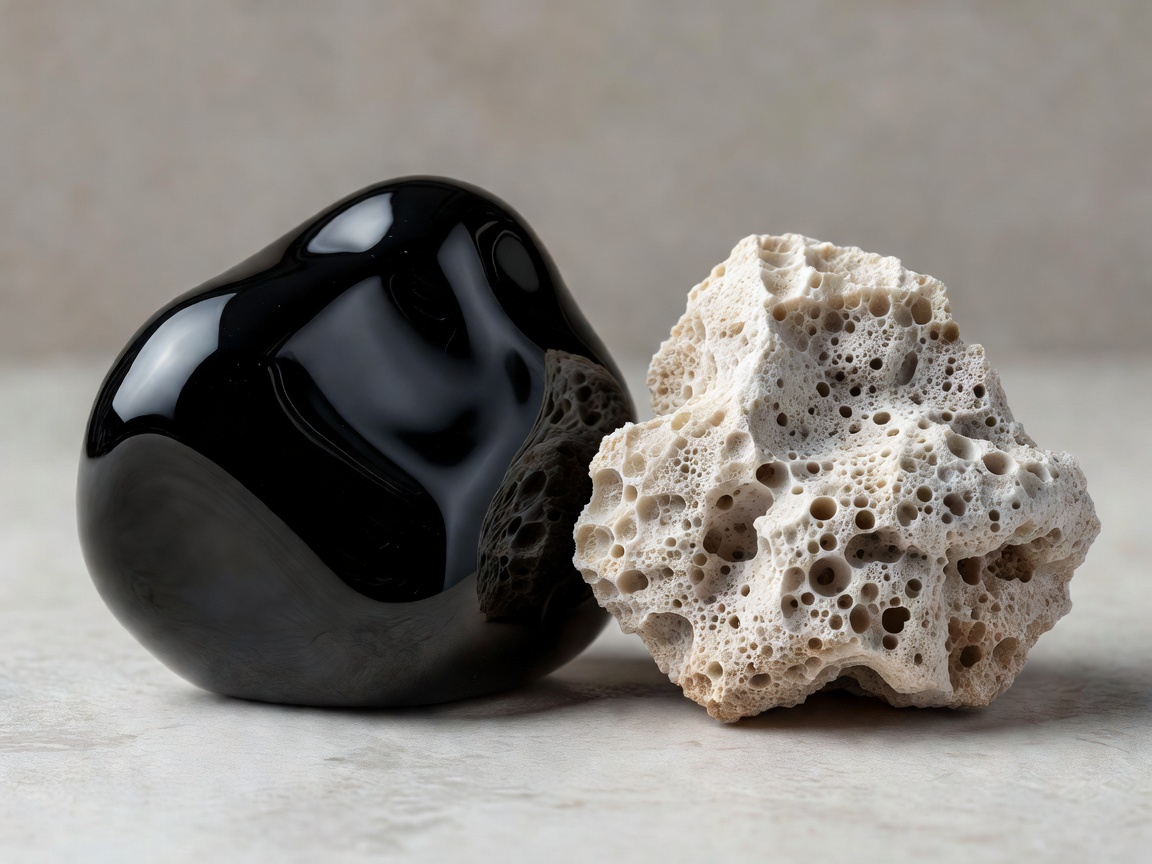 Igneous
Obsidian and pumice
Same silica-rich melt; one chilled dense, one frothed with gas.