Start with the Rock Itself
Most of the world's famous erosional shapes are carved in sedimentary rock — sandstone, limestone, mudstone — that formed in layers from sand, mud or shell debris settling over long periods. Each layer can differ in grain size and, crucially, in what holds the grains together.
That glue is called cement. Grains bound by silica are tough; grains bound by weak clay or easily dissolved calcite give way faster. When a cliff contains layers of differing strength, weathering removes the weak ones first and leaves the strong ones projecting as ledges, caps and bridges. Geologists call this differential erosion, and it is the single most useful idea for reading unusual rock forms.
Definition: weathering vs erosion
Weathering breaks rock down where it sits — by frost, chemistry or plant roots. Erosion moves the loosened material away, by water, wind, ice or gravity. The two usually work together.
Definition: joint
A crack in rock along which there has been little or no sliding. Joints often form in parallel sets and guide where water can enter.
Definition: cementation
The process by which minerals crystallise between sediment grains, binding loose sand or mud into solid rock.
Arches and the Work of Joints
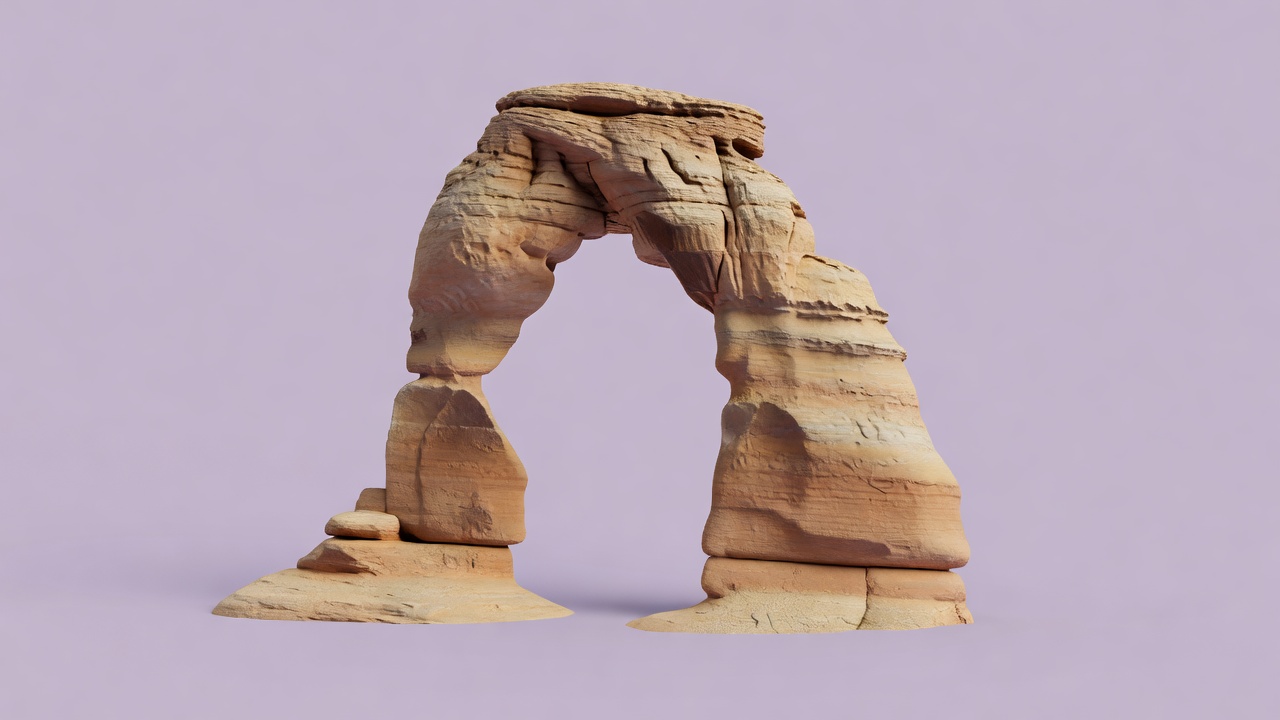
Arches National Park in Utah holds more than 2,000 catalogued natural arches, most carved in the Entrada Sandstone. The process usually begins underground: as overlying rock was stripped away and the region gently uplifted, the sandstone cracked into parallel vertical joints. Water widened those cracks, leaving long, thin walls of rock called fins.
Within a fin, a weaker patch may weather faster — moisture softens the cement, frost pries grains loose, and gravity removes blocks from below. In time an opening breaks through. Pieces keep falling until the remaining rock forms a curve that carries its own weight efficiently. Delicate Arch, standing alone on a slickrock bowl, is the best-known result.
Arches are also temporary. Wall Arch in the same park collapsed in 2008, a reminder that the process continues after the photograph.
Joint sets, frost action and water softening of cement drive fin and arch formation; rockfalls are documented and ongoing.
Laboratory experiments published in 2014 suggest stress within loaded sandstone actually slows erosion, helping arches settle into stable shapes. The idea is well supported in the lab and still being examined in the field.
Hoodoos and Fairy Chimneys
Bryce Canyon in Utah has one of the densest concentrations of hoodoos on Earth: tall, thin spires of the pink and white Claron Formation, a limestone-rich rock that varies in hardness from layer to layer. Bryce sits high enough that temperatures cross freezing on many nights of the year. Meltwater seeps into cracks by day, freezes and expands at night, and gradually wedges the rock apart. Rain, slightly acidic, rounds the edges.
A harder layer at the top shields each spire like an umbrella, so the column beneath erodes more slowly than the open ground around it. When the cap finally falls, the spire wears down quickly.
In Cappadocia, Türkiye, similar-looking "fairy chimneys" are carved from soft volcanic tuff, capped by harder volcanic rock. The rock and history differ completely, yet the principle — resistant cap over weak column — produces a similar form. Geologists call this convergence: different paths, similar shapes.
Stone That Looks Like It Is Flowing
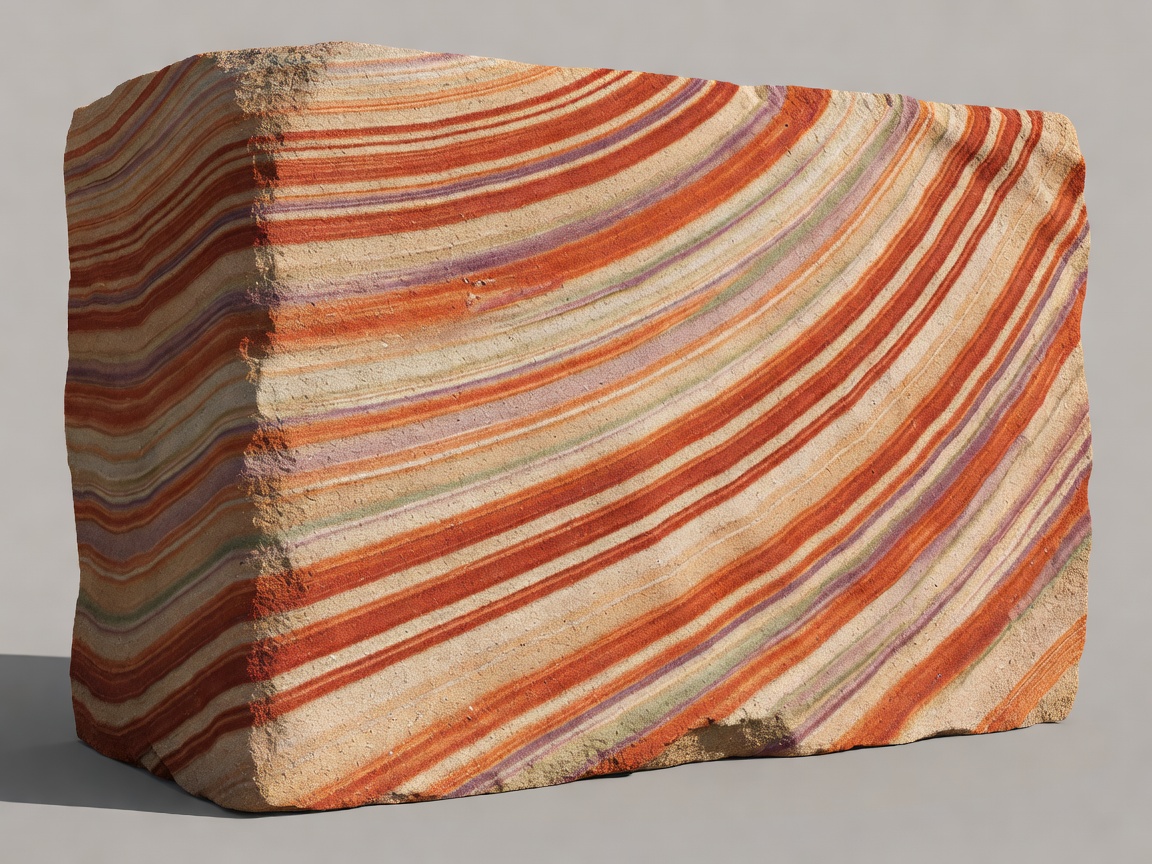
Some rock forms look fluid even though nothing is moving. The Wave, in the Coyote Buttes area on the Arizona–Utah border, is carved in Navajo Sandstone — the hardened remains of a Jurassic desert of migrating dunes. The curving stripes are cross-beds: the sloping faces of those ancient dunes, preserved and later exposed and polished by wind and occasional water.
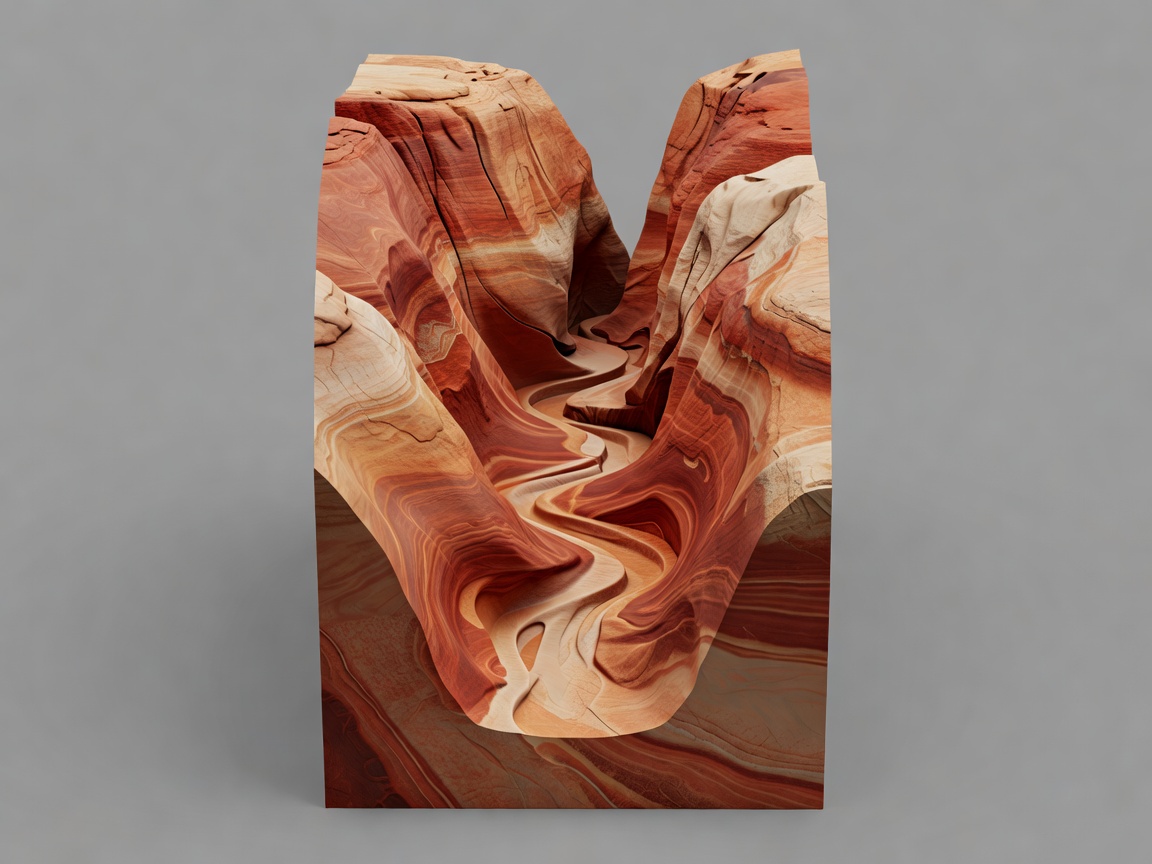
Nearby, Antelope Canyon shows water at its most concentrated. Normally dry, it carries sudden flash floods that drive sand and gravel through a narrow joint, scouring the smooth, corkscrewing walls that photographers prize. The same flash floods make slot canyons genuinely dangerous to enter when storms are upstream.
 Sedimentary
Cross-bedding
Fossil dune faces recorded in stone, read as wind direction from 190 million years ago.
 Explanatory model
Slot canyons
Flash floods exploit a single crack, abrading it into a deep, narrow passage.